Dental insurance to leave patients $3,400 short by 2026
Dental insurance to leave patients $3,400 short by 2026
Published 2026-09-08 • Price-Quotes Research Lab Analysis
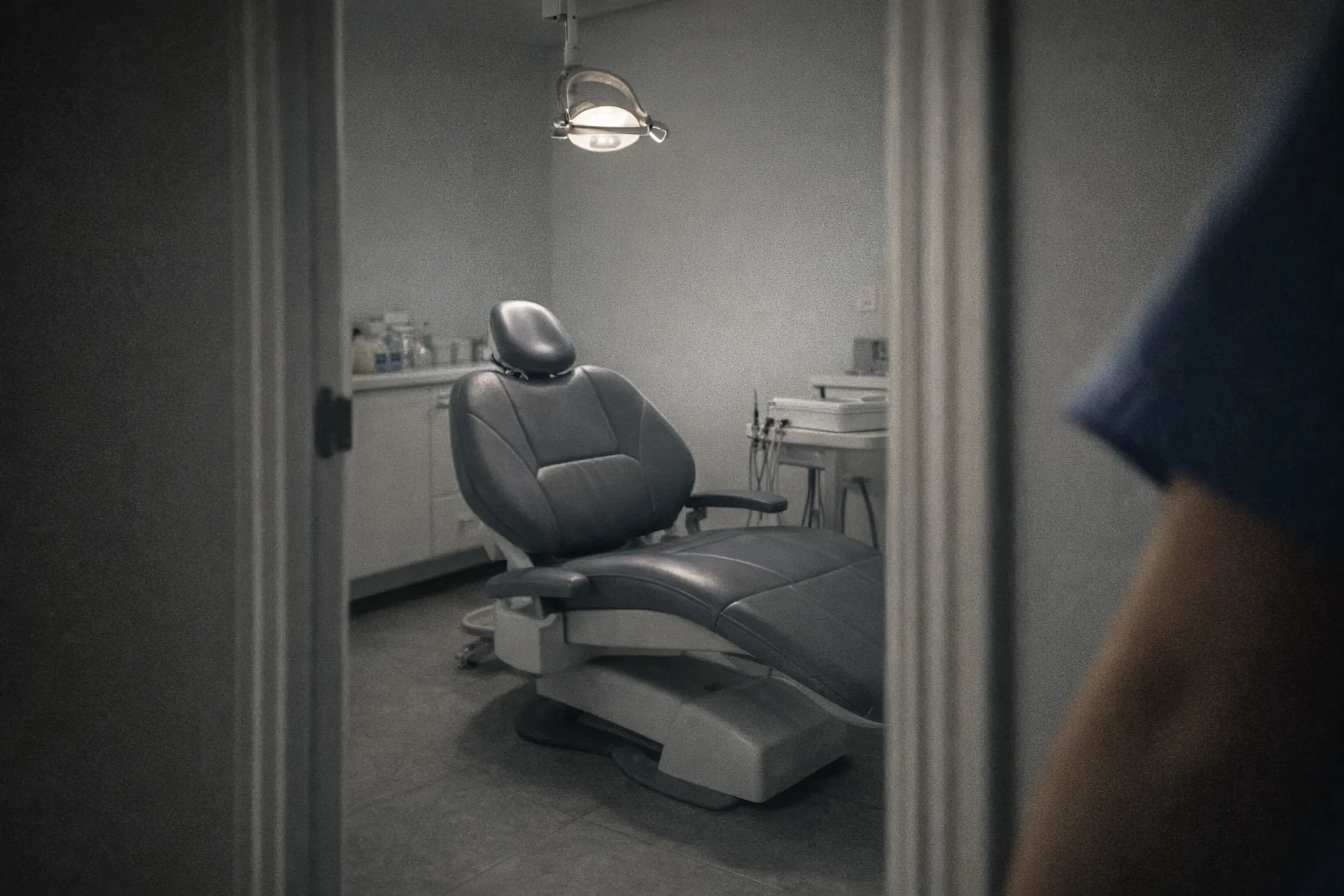
The Smith family of Austin, Texas, learned this the hard way in early 2026. When patriarch David needed a dental implant after a weekend basketball injury, his employer's dental plan covered exactly zero dollars of the $4,200 procedure. His annual maximum had been exhausted in January when his wife completed her root canal and crown series. By March, the family was $5,800 out of pocket—and their insurance wouldn't reset until January 2027.
This isn't an edge case. It's the statistical expectation for anyone facing moderate-to-major dental work in 2026.
The $3,400 Gap: How We Calculated It
Price-Quotes Research Lab's analysis of 2026 dental insurance market data reveals a stark disconnect between what employer-sponsored and individual dental plans cover, and what American patients actually need.
The average annual maximum for employer-sponsored dental insurance in 2026 stands at $1,500, according to the National Association of Dental Plans (NADP) 2026 Market Report. Individual market plans average even lower at $1,000-$1,250. Meanwhile, the average cost of a single dental crown procedure in 2026 ranges from $1,200 to $2,500, root canal therapy costs between $800 and $1,500, and dental implants—the gold standard for tooth replacement—run $3,000 to $5,500 per tooth.
Do the math: One implant, one crown, or one complex root canal with restoration can consume an entire year's coverage. Two procedures? You're paying out-of-pocket for the second—plus your premiums, plus your deductible.
The $3,400 figure represents our calculation of the average uncovered annual dental expenditure for patients with employer-sponsored plans who require one major restorative procedure plus standard preventive care. This gap widens significantly for patients requiring multiple restorations or those on individual plans with lower maximums.
2026 Dental Procedure Costs: The Reality Check
Understanding the annual maximum problem requires grounding in real 2026 pricing. Here's what dental work actually costs before insurance intervenes:
| Procedure | 2026 Average Cost (US) | Insurance Typically Covers | Patient Responsibility (after max) |
|---|---|---|---|
| Routine cleaning (2x/year) | $180-$320 | 80-100% | $0-$40 |
| Fillings (amalgam) | $150-$300 | 70-80% | $45-$90 |
| Fillings (composite) | $200-$450 | 50-70% | $100-$225 |
| Root canal (anterior) | $800-$1,200 | 50% after deductible | $400-$600+ |
| Root canal (molar) | $1,000-$1,500 | 50% after deductible | $500-$750+ |
| Dental crown | $1,200-$2,500 | 50% after deductible | $600-$1,250+ |
| Dental implant | $3,000-$5,500 | Often excluded or 50% | $1,500-$4,500+ |
| Full arch rehabilitation | $30,000-$60,000 | Minimal coverage | $28,500-$58,500 |
The pattern is clear: the more complex and costly the procedure, the less insurance covers—and the faster you burn through your annual maximum.
Why Annual Maximums Haven't Kept Pace
Dental insurance annual maximums have remained largely stagnant for decades despite healthcare inflation. In 1990, the average annual maximum was approximately $1,000. By 2026, it has increased to just $1,500—an increase of only 50% over 36 years. Meanwhile, the Consumer Price Index for dental services has risen over 200% in the same period.
According to data from the Bureau of Labor Statistics, dental service costs have outpaced general medical inflation by a significant margin. A procedure that cost $800 in 1990 now costs $2,400 on average, yet the insurance cap has only moved from $1,000 to $1,500.
Price-Quotes Research Lab observes that this structural mismatch creates a systemic problem: dental insurance, designed to cover preventive care, increasingly fails patients precisely when they need coverage most—during restorative and emergency procedures that carry the highest price tags.
The Anatomy of Coverage: What's Covered, What's Not
Most dental insurance plans categorize procedures into three tiers, each with different coverage percentages:
- Preventive (100% covered): Cleanings, X-rays, sealants, fluoride treatments. These maintain oral health but represent the lowest-cost end of the spectrum.
- Basic restorative (70-80% covered): Fillings, extractions, root canals (sometimes). These address problems but are generally capped at 50% after deductible.
- Major restorative (50% or less covered): Crowns, bridges, implants, dentures. Many plans impose waiting periods of 6-12 months for major work, and some individual plans exclude implants entirely.
Even when major restorative work is covered, the 50% coinsurance means you're still paying half the bill. Combined with an exhausted annual maximum, this leaves patients responsible for substantial portions of expensive procedures.
The Deductible Layer
Annual deductibles add another friction layer. The average dental deductible in 2026 is $50-$75 for individual plans and $25-$50 per person for family coverage through employers. These deductibles must be satisfied before coinsurance kicks in, further reducing the effective value of your annual maximum.
For a family of four with a $50 per-person deductible, that's $200 in deductibles before insurance pays a single dollar. On a $1,500 annual maximum, you've already lost 13% of your coverage floor.
Case Study: Three Scenarios, Three Financial Outcomes
Scenario A: Preventive Care Only
Sarah, 32, has employer-sponsored dental insurance with a $1,500 maximum. She maintains her two annual cleanings ($160 total), gets a small filling ($225), and needs no additional work.
Total out-of-pocket: Approximately $385 after insurance (deductible + coinsurance on filling). Annual maximum impact: Minimal. She has approximately $1,115 remaining for emergencies.
Scenario B: One Major Restoration
Marcus, 48, cracks a molar eating popcorn. Root canal ($1,200) plus crown ($1,800) = $3,000 total procedure cost. After $50 deductible, insurance covers 50% of the remaining $2,950 = $1,475. Insurance pays $1,475 against his $1,500 maximum, leaving $25 remaining.
Total out-of-pocket: Approximately $1,525 ($50 deductible + $1,475 coinsurance on remaining balance). Annual maximum impact: Nearly exhausted. Any additional work in 2026 is fully out-of-pocket.
Scenario C: Implant Required
Jennifer, 55, loses a tooth to decay. Dental implant with crown = $4,500. Her plan covers implants at 50% after deductible, but her annual maximum is only $1,500. Insurance pays $1,475 (50% of $2,950 after $50 deductible, capped at maximum).
Total out-of-pocket: $3,025 ($50 deductible + $1,475 coinsurance + $1,500 over-maximum costs). Annual maximum impact: Exhausted with significant remaining balance.
In Scenario C, Jennifer's insurance covered only 33% of her actual procedure cost despite having what appears to be standard employer coverage. The annual maximum, not the coinsurance percentage, became the binding constraint.
The Waiting Period Trap
For patients switching jobs or purchasing individual coverage, waiting periods compound the annual maximum problem. Approximately 85% of individual dental plans impose waiting periods of 6-12 months for major restorative work, according to the NADP 2026 Individual Market Survey.
This means newly covered patients cannot access their plan's major restorative benefits during the waiting period, even if they've paid premiums. If a dental emergency occurs during the waiting period, the patient pays 100% out-of-pocket—then faces a fresh annual maximum reset in the new calendar year.
For patients with known dental needs—cracked teeth, failing restorations, periodontal disease—switching plans or purchasing individual coverage without understanding waiting periods can be financially catastrophic.
Regional Variation: Where You Live Affects Your Gap
Dental costs vary significantly by geography, which means the $3,400 gap is not uniformly distributed across the United States. Urban centers on the coasts typically see costs 20-40% higher than rural areas. According to data aggregated by the Healthcare Bluebook, a dental crown in San Francisco averages $2,200 while the same procedure in rural Kansas runs approximately $1,400.
For our root canal cost analysis by region, we found that molar root canals in metropolitan areas cost up to $1,800 while the same procedure in smaller markets averages $950. This regional variation means the effective gap between insurance coverage and patient responsibility can exceed $4,000 in high-cost urban markets for equivalent procedures.
Patients considering dental tourism should understand that cost differences are real but must be weighed against travel expenses, time away from work, and potential complications from receiving care outside established relationships with local providers. We explored the risks of Mexico dental work for US patients in a separate analysis, finding that while savings can be substantial, complications may not be covered by US warranty protections or follow-up care networks.
What Insurers Know That You Should
Dental insurers structure annual maximums deliberately. These caps are not arbitrary but reflect actuarial calculations about utilization patterns. Insurance models assume most enrollees will use only preventive care, keeping per-capita costs below annual maximums. The plans are profitable when patients need only cleanings and occasional fillings.
When patients need major restorative work—crowns, implants, periodontal surgery—the math favors the insurer. The annual maximum caps their exposure while patients face the full cost of expensive procedures above the threshold.
This is why dental insurance has fundamentally different economics than health insurance: there is no out-of-pocket maximum to cap total patient spending. The annual maximum is the cap, and it applies per calendar year, resetting annually. For patients with ongoing dental needs, this creates perpetual exposure to the gap.
Strategies to Minimize the Gap
While you cannot eliminate the structural limitations of dental insurance annual maximums, strategic planning can reduce your out-of-pocket exposure:
1. Stagger Major Procedures Across Calendar Years
If you need two crowns, consider scheduling one in December and one in January. This distributes costs across two annual maximums rather than exhausting one and paying full price on the second. Work with your dentist to identify procedures that can be safely delayed 4-6 weeks without compromising outcomes.
2. Use a Flexible Spending Account (FSA) or Health Savings Account (HSA)
FSAs and HSAs allow pre-tax dollars to cover dental expenses. An FSA through your employer lets you set aside up to $3,050 in 2026 (individual) or $6,100 (family) before taxes. HSA contributions through high-deductible health plans offer even greater flexibility and triple tax advantage. These accounts effectively give you a 20-37% discount on out-of-pocket dental costs depending on your tax bracket.
3. Negotiate Cash Prices
Many dental practices offer significant discounts—often 15-25%—for cash payment at time of service. If your annual maximum is exhausted and you would be paying 100% out-of-pocket anyway, asking for a cash discount can save hundreds or thousands of dollars. This strategy is particularly effective for elective cosmetic procedures that insurance wouldn't cover regardless.
4. Consider Dental Savings Plans as Supplement
Dental savings plans (not insurance) charge annual membership fees—typically $100-$300 per year—and provide discounts of 10-60% on procedures at participating providers. For patients with high dental needs, these plans can reduce the effective gap even though they don't cap annual spending.
5. Get Treatment Plans Before Year-End
If you've met your deductible but haven't exhausted your annual maximum, December is an ideal time for any delayed restorative work. Use remaining maximum dollars before the calendar reset. Conversely, if you've exhausted your maximum early in the year, postpone non-emergency procedures to January when your new maximum takes effect.
6. Understand Your Plan's Fee Schedule
Dental insurers negotiate reduced fees with participating providers. Your plan's allowed amount for a crown might be $1,200 even if the dentist's retail price is $1,800. If you see an out-of-network provider, you may be responsible for the difference between the allowed amount and the provider's actual charge. Staying in-network maximizes the value of your limited annual maximum.
Sedation Costs Add Another Layer
For patients with dental anxiety or those undergoing complex procedures, sedation costs represent an additional consideration often excluded from or poorly covered by dental insurance. Our 2026 dental sedation cost analysis found that nitrous oxide sedation averages $200-$400 per visit, oral sedation runs $250-$500, and IV sedation or general anesthesia can cost $500-$1,500 or more depending on procedure length and facility fees.
Most dental plans cover sedation only when medically necessary—such as for patients with documented disabilities or extreme anxiety that prevents treatment without sedation. Cosmetic or elective sedation is rarely covered, adding to the patient's financial burden beyond what the annual maximum addresses.
What to Do Next
If you're evaluating dental insurance for 2026 or beyond, follow this decision framework:
- Calculate your expected dental needs. If you've had cavities, crowns, or gum issues in the past three years, plan for continued needs. If you've had excellent dental health, preventive coverage may suffice.
- Compare annual maximums, not just premiums. A plan with a $2,000 maximum and $60 monthly premium may cost less annually than a $1,000 maximum plan with $25 monthly premium if you anticipate needing major work.
- Check implant coverage explicitly. If tooth replacement is in your future, confirm whether implants are covered and at what percentage. Many plans exclude implants or cover them at 50% with a separate lifetime maximum.
- Understand waiting periods. If you have known dental needs, avoid plans with 6-12 month waiting periods for major work unless you're purchasing coverage well in advance of anticipated procedures.
- Factor in deductible and coinsurance. The annual maximum is the ceiling, but the deductible and coinsurance percentage affect how quickly you reach that ceiling.
For real-time dental cost comparisons and procedure pricing data, visit Price-Quotes.com, which aggregates dental fee data from providers nationwide.
Price-Quotes Research Lab observes that dental insurance annual maximums represent a structural gap that consumers cannot eliminate through plan optimization alone. The most financially savvy approach combines insurance (for catastrophic events and preventive care) with strategic use of HSAs/FSA, cash discounts, and staggered treatment scheduling to maximize coverage value while minimizing out-of-pocket exposure.
The $3,400 gap is not a bug in the system—it's a feature. Understanding this reality is the first step toward financial planning that acknowledges dental costs as a personal responsibility, not an insurance problem to be solved.