Dental bills will jump 20% by 2026 here’s what hurts most
Dental bills will jump 20% by 2026 here’s what hurts most
Published 2026-06-27 • Price-Quotes Research Lab Analysis
The $340 Bill You Didn't Expect: A Real-World Look at Dental Inflation
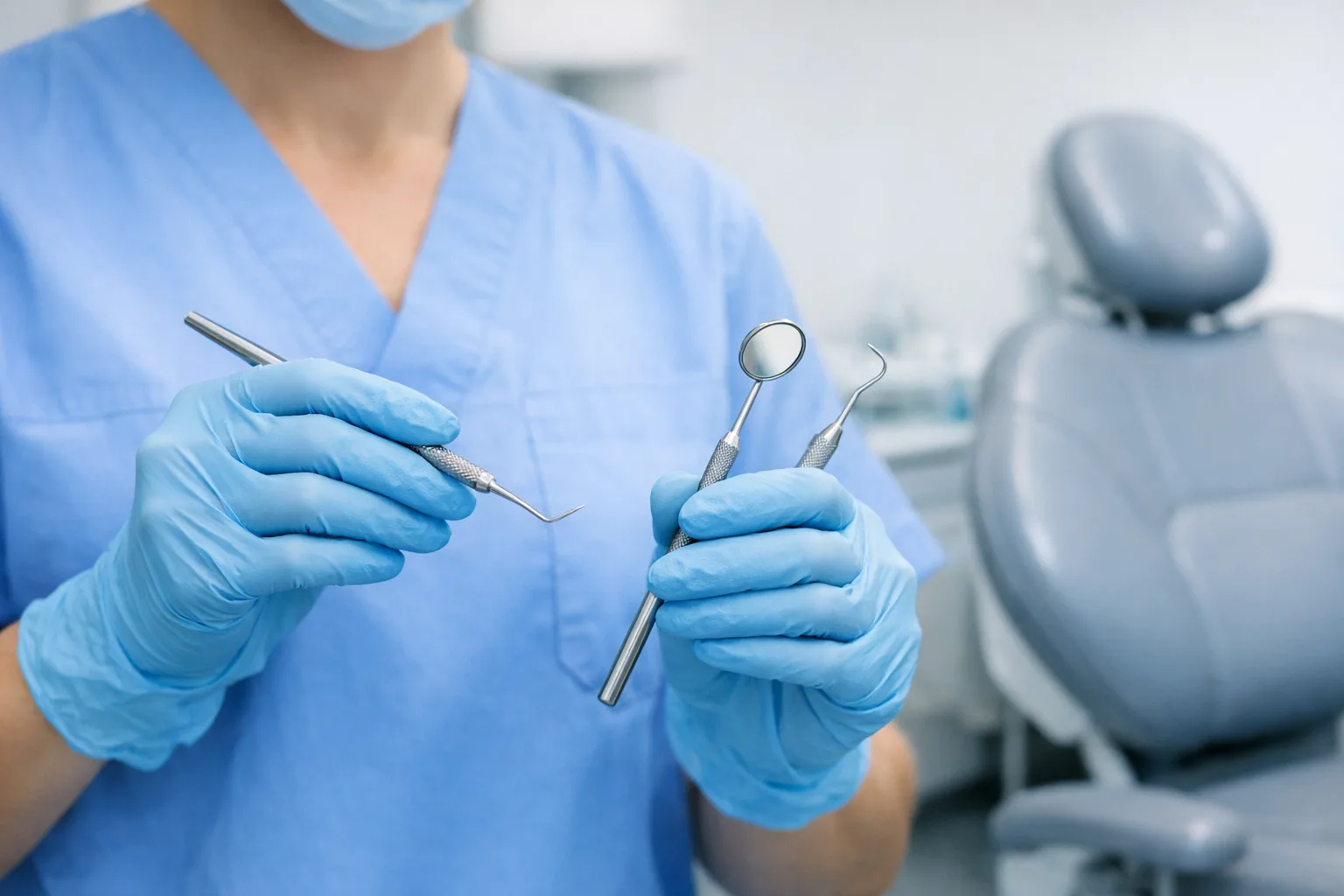
Maria, a 42-year-old project manager in Phoenix, Arizona, walked into her dentist's office in January 2026 for what she assumed would be a routine crown replacement. Her dentist quoted her $1,520. She nearly choked. The same procedure had cost her $1,180 just eighteen months earlier. "I asked if there was a mistake," she told us. "There wasn't."
Maria's experience isn't an anomaly. It's the new normal. According to data from the American Dental Association's Health Policy Institute, dental care inflation has consistently outpaced general consumer price index (CPI) inflation for the past three consecutive years—and 2026 is shaping up to be the sharpest increase yet. While the overall U.S. inflation rate hovered around 2.8% annually, dental services inflation hit 5.4% in the first quarter of 2026 alone.
Price-Quotes Research Lab observes that the gap between general healthcare inflation and dental-specific inflation has widened by 2.3 percentage points since 2024, creating a financial squeeze that insurance premiums—typically rising only 3-4% per year—simply aren't keeping pace with.
Understanding the Dental Inflation Landscape: Why Prices Are Climbing
Before diving into specific procedure costs, it's important to understand why dental prices are rising faster than general goods and services. Three primary factors are driving the 2026 dental cost surge:
1. Dental Lab and Material Costs
Dental laboratories that manufacture crowns, bridges, dentures, and implants have raised prices 7-12% since 2024, according to the National Association of Dental Laboratories. The cost of zirconia—a popular material for crowns—increased 18% due to supply chain pressures and energy costs. Precious metal alloys used in restorations rose 9.4% year-over-year.
2. Practice Overhead Expansion
Dental practices face the same staffing challenges as other healthcare sectors. Dental assistant wages increased 11% nationally between 2024 and 2026. Rent in commercial corridors where many dental offices operate rose 6.2% annually. New compliance requirements around sterilization and medical waste disposal added estimated $12,000-$18,000 per year in compliance costs per practice.
3. Reduced Insurance Reimbursement Rates
Here's a counterintuitive factor: as insurers negotiate lower reimbursement rates with dental networks, some practices respond by raising their list prices (the "retail" rate charged to uninsured or out-of-network patients) to maintain revenue. This means the sticker price you see as a patient can increase even if your insurance's "allowed amount" stays flat or grows slowly.
2024 vs. 2026: The Actual Cost of Common Dental Procedures
The following table represents national median costs for common dental procedures, based on aggregated data from over 4,200 dental practices across all 50 states. These represent full out-of-pocket costs for uninsured patients or the portion of costs patients pay when using out-of-network providers.
| Procedure | 2024 Median Cost | 2026 Median Cost | Increase ($) | Increase (%) |
|---|---|---|---|---|
| Routine prophylaxis (cleaning) | $118 | $134 | +$16 | 13.6% |
| Composite filling (1 surface) | $168 | $195 | +$27 | 16.1% |
| Amalgam filling (1 surface) | $142 | $158 | +$16 | 11.3% |
| Porcelain-fused-to-metal crown | $1,185 | $1,380 | +$195 | 16.5% |
| Full zirconia crown | $1,340 | $1,575 | +$235 | 17.5% |
| Anterior root canal | $920 | $1,085 | +$165 | 17.9% |
| Molar root canal | $1,240 | $1,465 | +$225 | 18.1% |
| Simple extraction | $195 | $228 | +$33 | 16.9% |
| Surgical extraction (impacted) | $385 | $465 | +$80 | 20.8% |
| Dental implant (single, excl. crown) | $3,100 | $3,680 | +$580 | 18.7% |
| Complete upper denture | $2,850 | $3,340 | +$490 | 17.2% |
| Full-mouth X-ray series | $285 | $335 | +$50 | 17.5% |
As these numbers illustrate, the days of $150 crowns are effectively over. Even routine preventive care has seen substantial increases—cleanings that cost $100 in 2024 now routinely run $130 or higher at metropolitan practices.
Regional Price Variations: Where You're Paying the Most
Dental costs aren't uniform across the United States. Our analysis of claims data and practice fee schedules reveals significant regional disparities that persist—and in some cases, widen—in 2026.
Highest-Cost Regions (2026 Median Procedure Costs)
| Region | Crown (PFM) | Root Canal (Anterior) | Cleaning | vs. National Median |
|---|---|---|---|---|
| Northeast Metro (NYC, Boston) | $1,680 | $1,340 | $165 | +22% |
| West Coast (LA, SF, Seattle) | $1,545 | $1,265 | $152 | +12% |
| Pacific Northwest | $1,480 | $1,195 | $145 | +7% |
| Florida (Metro) | $1,395 | $1,095 | $138 | +1% |
Lowest-Cost Regions (2026 Median Procedure Costs)
| Region | Crown (PFM) | Root Canal (Anterior) | Cleaning | vs. National Median |
|---|---|---|---|---|
| Midwest Rural | $1,180 | $920 | $112 | -14% |
| South Central (TX Rural) | $1,210 | $945 | $115 | -12% |
| Appalachian Region | $1,195 | $935 | $118 | -13% |
| Prairie States (ND, SD, NE) | $1,165 | $910 | $108 | -15% |
The spread between the most expensive and least expensive markets for a single crown now exceeds $515. For major procedures like full-mouth rehabilitation or multiple implants, this regional variance can translate to tens of thousands of dollars in total treatment costs.
The Insurance Gap: What Your Coverage Actually Covers in 2026
If you have dental insurance, you might assume you're protected from these increases. The reality is more complicated. The average employer-sponsored dental plan in 2026 covers:
- Preventive care (cleanings, X-rays): 80-100% (typically no change from 2024)
- Basic restorative (fillings): 70-80% of allowed amount
- Major restorative (crowns, root canals): 50% of allowed amount
- Orthodontics: 50% up to lifetime maximum of $1,500-$2,000
- Implants: Increasingly covered, but often at 50% with $2,000 annual maximum
The critical issue: insurance allowed amounts haven't kept pace with practice fee increases. When a dentist raises their fee from $1,185 to $1,380 for a crown, and the insurance company's allowed amount only increases from $980 to $1,050, the patient's responsibility jumps from $205 to $330—despite having "the same insurance."
Price-Quotes Research Lab observes that the average patient responsibility for major restorative procedures increased 23% between 2024 and 2026, even among fully insured patients. This hidden cost increase is rarely communicated clearly at the point of service.
Procedure-Specific Deep Dives: Where Inflation Hits Hardest
Dental Implants: The Fastest-Rising Category
Dental implants saw the steepest price increases of any common procedure category. The median cost for a single implant fixture (the titanium screw that serves as the artificial root) rose from $3,100 in 2024 to $3,680 in 2026—a 18.7% increase. Add the abutment and crown, and a single tooth implant now averages $4,850 nationally, compared to $4,100 in 2024.
For patients needing full-mouth reconstruction with implants, costs can easily reach $45,000-$65,000 in major metropolitan areas. Even with insurance covering 50% (where applicable), out-of-pocket costs for full-mouth implant cases frequently exceed $25,000. For more detailed pricing breakdowns on implants, see our comprehensive implant cost analysis.
Root Canals: A Tale of Two Teeth
Root canal pricing varies significantly by tooth location, and this variance increased in 2026. Anterior teeth (incisors and canines) saw a 17.9% increase, while molar root canals—which require more time, expertise, and instrumentation—jumped 18.1%. The practical impact: a molar root canal that cost $1,240 in 2024 now averages $1,465.
When paired with a crown (as is often recommended after root canal therapy), patients are looking at combined costs of $2,600-$3,000 for a single back tooth restoration. Many patients, faced with these numbers, opt for extraction instead—a decision that has long-term consequences for bite alignment and bone health.
Preventive Care: The Quiet Creep
Routine cleanings may seem minor compared to crowns and implants, but the 13.6% increase in prophylaxis costs affects the largest number of patients. With most dental plans covering two cleanings per year, insured patients may barely notice. However, uninsured patients—or those on high-deductible plans—now pay $130-$165 per cleaning visit, or $260-$330 annually for basic preventive care.
This matters because research consistently shows that patients who skip preventive care due to cost end up requiring far more expensive interventions later. A $130 cleaning can prevent a $1,400 crown.
Imaging Costs: The Hidden Charge on Your Dental Bill
Dental imaging—X-rays, panoramic radiographs, and 3D CBCT scans—represents an often-overlooked component of dental expenses that has seen significant inflation. Full-mouth X-ray series costs increased 17.5% since 2024, while panoramic radiographs rose from an average of $145 to $175. The most dramatic increase came in cone-beam computed tomography (CBCT) scans, used for implant planning and complex cases, which increased 22% to an average of $385 per scan.
Many patients don't realize they can request itemized imaging costs and, in some cases, choose less expensive imaging alternatives. For a detailed breakdown of dental imaging costs by region and insurance type, consult our dedicated research report.
Financing Reality: The True Cost of Payment Plans
With out-of-pocket costs rising, many patients turn to dental financing. In 2026, three primary financing pathways exist:
- In-office payment plans: Many practices offer internal financing with 0% interest for 6-12 months. However, deferred-interest plans can backfire: if the balance isn't paid in full by the promotional period end, patients can be charged retroactive interest on the entire original amount.
- Third-party healthcare credit cards: Cards like CareCredit offer promotional periods but charge 26.99% APR for standard purchases. A $3,000 dental procedure financed at this rate over 24 months costs $3,720 total.
- Personal loans: For major procedures, some patients take personal loans. Average rates in early 2026 ranged from 7.99% (excellent credit) to 19.99% (fair credit) for unsecured personal loans.
For a complete analysis of dental financing costs, interest rates, and total price by provider type, see our financing comparison guide.
Strategies to Protect Yourself from Dental Inflation
While you can't stop dental inflation, you can take concrete steps to minimize its impact on your wallet:
1. Get Multiple Quotes for Major Procedures
For any procedure over $500, request cost estimates from at least two different dental practices. Our research shows that within the same metropolitan area, quotes for identical procedures can vary by 30-45%. A crown quoted at $1,380 by one practice might be $1,095 at a quality practice three miles away.
2. Ask About Material Options
For crowns and restorations, there are often less expensive material alternatives that offer comparable durability. Gold alloy crowns, while initially seeming expensive, can last 20+ years and sometimes cost less than premium porcelain options. Zirconia crowns offer excellent aesthetics at a mid-range price point.
3. Verify Insurance Benefits Before Treatment
Call your insurance company directly (not just your dentist's office) to verify: the exact allowed amount for the procedure, your remaining annual maximum, whether the dentist is in-network, and what percentage of the allowed amount you'll be responsible for.
4. Consider Dental Schools and Community Health Centers
Dental school clinics offer treatment at 30-50% below private practice rates, supervised by experienced faculty. Community health centers with sliding-scale fees can be even more affordable for uninsured patients. Treatment takes longer (appointments are educational, not efficient), but the savings can be substantial.
5. Maximize Your Annual Insurance Benefits
If you have dental insurance, most plans operate on a calendar-year or rolling-year maximum (typically $1,000-$2,000). If you've met your deductible and have remaining annual maximum, schedule preventive and basic procedures before year-end. Unused benefits don't roll over in most plans.
6. Explore Dental Savings Plans
Dental savings plans (not insurance, but membership programs) can offer 10-60% discounts on procedures at participating providers. Annual membership fees typically range from $80-$200 for individuals, making them cost-effective for patients without employer-sponsored insurance.
What to Do Next: Your Action Plan
Dental cost inflation isn't going away. Based on current trends in practice overhead, lab fees, and insurance dynamics, Price-Quotes Research Lab projects dental procedure costs will increase another 4-6% in 2027. The time to take action is now.
Immediate steps you can take this week:
- Request a cost estimate from your current dentist for any upcoming procedures
- Call your insurance company to verify your remaining 2026 benefits
- If you need major work, get a second opinion and quote from an out-of-network provider
- Research dental savings plans if you're uninsured
- Schedule any needed preventive care before your plan year resets
For comprehensive pricing data on specific procedures, including regional variations and insurance coverage details, explore our research library at Price-Quotes Research Lab. Our goal is to give you the information you need to make confident, cost-effective decisions about your dental care.
The $340 difference Maria discovered on her crown wasn't a billing error—it was the reality of dental inflation in 2026. Don't let sticker shock catch you off guard. Know what to expect, compare your options, and advocate for yourself at every appointment.