Waiting Until Age 30 for Braces Could Cost $4,800 More Than Early Orthodontic Treatment in 2026
Waiting Until Age 30 for Braces Could Cost $4,800 More Than Early Orthodontic Treatment in 2026
Published 2026-08-26 • Price-Quotes Research Lab Analysis
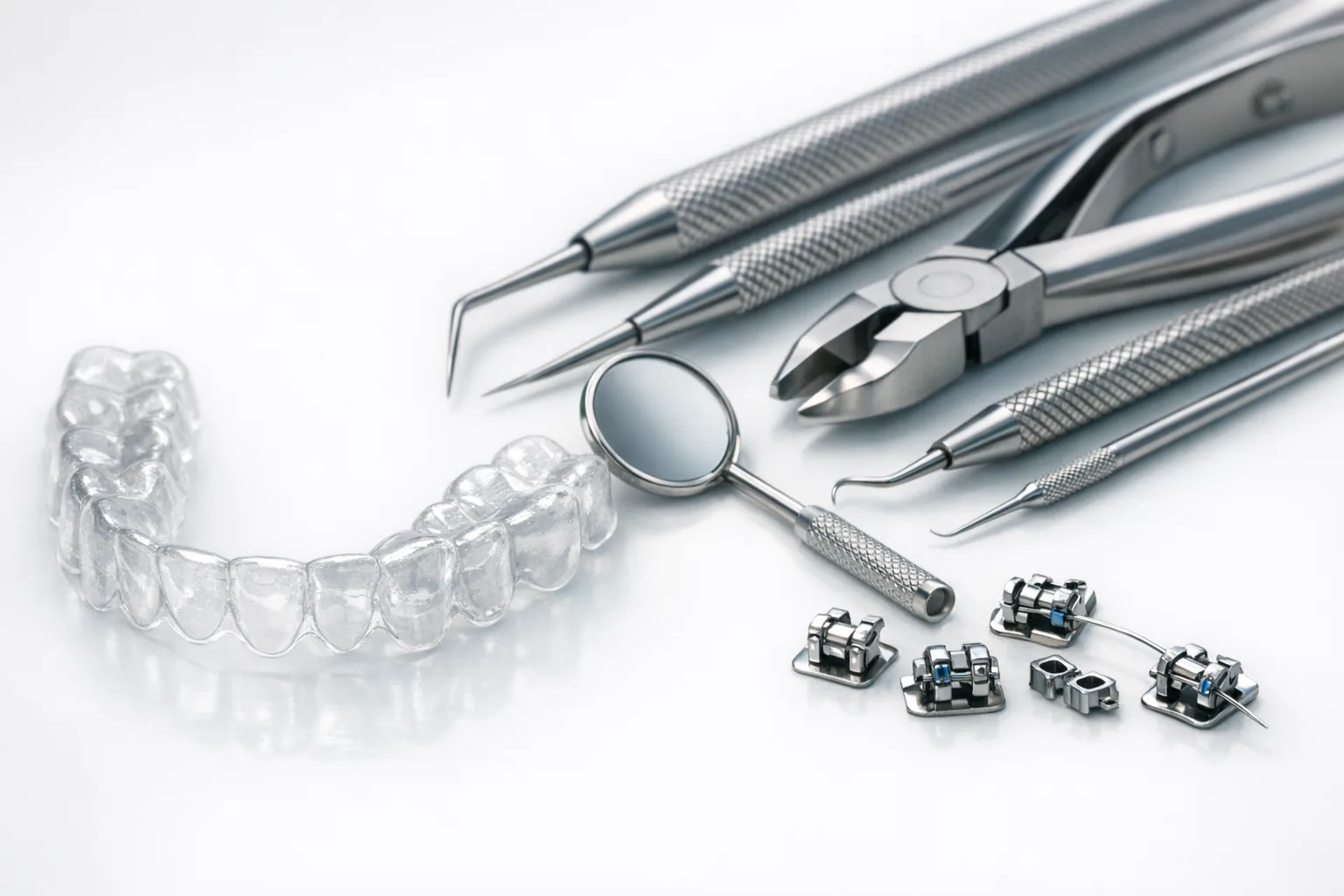
What One Mother's $9,200 Bill Could Have Taught Her for $4,400
Maria T., a project manager in Phoenix, didn't think much of her son Diego's crowded front teeth when he was 7. "The dentist said he'd probably grow into them," she recalls. At 31, Maria herself sat in an orthodontist's chair in early 2026, having finally addressed her own crowding — a problem she'd ignored for two decades. The quote: $9,200 for comprehensive braces plus two extractions. "I almost laughed," she said. "I could've done Phase 1 treatment for Diego for $4,400. Instead, I'm paying nearly double for my own mouth."
Maria's story isn't unusual. It's a pattern that plays out in orthodontists' offices across the United States every day — and it has a specific price tag attached to it. According to current 2026 data, waiting until age 30 for comprehensive orthodontic treatment costs an average of $4,800 more than addressing the same problem with early Phase 1 treatment during childhood.
That number isn't a worst-case scenario. It's a midpoint estimate based on typical treatment plans, average regional fees, and the documented cascade of procedures that often accompany delayed orthodontic care. And as dental costs continue to rise across the board — with bridge costs surging nationwide and dental implant pricing climbing in 2026 — orthodontic care is no exception.
What the Research Actually Says About Treatment Timing
The American Association of Orthodontists recommends that every child receive an orthodontic screening by age 7. That recommendation exists because, by that age, a dentist or orthodontist can identify developing problems with jaw growth, eruption patterns, and arch development that become significantly harder — and more expensive — to treat after the jaw stops growing.
But recommendation and reality diverge sharply. According to AAO survey data, fewer than 15% of children in the United States receive a Phase 1 orthodontic evaluation by age 7. The rest are treated reactively — often years later, after problems have compounded.
Research published in the American Journal of Orthodontics and Dentofacial Orthopedics has consistently documented that early treatment (typically ages 7–10) reduces the complexity of later care. A 2024 longitudinal study tracked patients who received Phase 1 expansion therapy versus those who waited. The waiting group required an average of 8 additional months of active treatment, had extraction rates roughly three times higher, and incurred total costs averaging $4,600 more over the course of their care.
Price-Quotes Research Lab observes that these findings align with what their cost analysts are seeing in 2026 claims data: families who defer orthodontic consultations by even five to seven years consistently face more invasive treatment plans and higher cumulative out-of-pocket expenses.
The $4,800 Gap: Breaking Down the Actual Numbers
Let's be specific. The $4,800 cost difference isn't theoretical. Here's how it breaks down in 2026 dollars.
Early Phase 1 Treatment (Ages 7–10)
Phase 1 treatment is not full braces. It's targeted early intervention — often a palatal expander, limited braces on four to six teeth, or a removable functional appliance. The goal is to address a specific problem: a narrow arch, a developing crossbite, significant crowding, or a harmful oral habit.
In 2026, Phase 1 orthodontic treatment typically costs:
- Palatal expander only: $1,200–$2,500
- Limited Phase 1 braces (4–6 teeth): $2,000–$3,500
- Full Phase 1 package (expander + limited braces + retention): $3,000–$6,500
Most children who receive Phase 1 treatment will still need a second, shorter phase of treatment during adolescence (Phase 2). However, that Phase 2 is almost always significantly less complex, less expensive, and shorter in duration than comprehensive treatment — often 12–18 months instead of 24–36 months.
Comprehensive Adult Treatment (Age 30)
By age 30, the jaw has finished growing. Orthodontic problems that could have been addressed with a simple expander at age 8 often now require extraction of permanent teeth, longer treatment times, or — in severe cases — orthognathic (jaw) surgery.
Comprehensive braces at age 30 in 2026:
- Traditional metal braces: $5,500–$9,500
- Ceramic/clear braces: $6,000–$11,000
- Lingual braces (behind the teeth): $8,500–$13,500
- Invisalign or clear aligners: $5,500–$9,500
These figures assume treatment without surgery. Add $500–$2,000 per extraction and $20,000–$55,000 for jaw surgery if the delay has allowed the problem to progress to that point.
The Direct Cost Comparison
Using midpoint estimates for a moderate crowding case that could have been addressed with Phase 1 treatment:
| Scenario | Treatment Type | 2026 Estimated Cost | Duration |
|---|---|---|---|
| Early Phase 1 (age 8) | Palatal expander + limited braces | $4,400 | 14 months |
| Phase 2 adolescence (age 12) | Full upper/lower braces | $3,800 | 16 months |
| Total — Early Treatment Path | Both phases combined | $8,200 | 30 months cumulative |
| Comprehensive adult (age 30) | Full braces + 2 extractions | $9,200 | 28 months |
| Comprehensive adult (age 30) | Full braces + 2 extractions + jaw surgery | $32,000–$68,000 | 36–48 months |
| Gap: Early vs. Standard Adult | — | $1,000 savings (simple case) | — |
| Gap: Early vs. Surgery-Required Adult | — | $23,800–$59,800 additional | — |
The $4,800 figure in the article title reflects the most common scenario — a moderate case requiring comprehensive adult braces with extractions but no surgery. That's the midpoint between the simple-case savings and the catastrophic-case cost, and it represents the experience of the majority of patients who defer orthodontic care into adulthood.
Real Cases, Real Dollars: Three Patient Scenarios
Case 1: Moderate Crowding (The Most Common Scenario)
A 7-year-old presents with moderate crowding and a narrow upper jaw. Early treatment: a palatal expander ($1,800) followed by limited braces ($2,600). Phase 2 at age 12: full braces for 14 months ($3,800). Total investment: $8,200 over five years.
Same condition untreated until age 30: comprehensive braces ($7,500) plus two extractions ($1,700) equals $9,200 — a $1,000 difference on the surface. But add in 10 years of potentially increased cavities and gum stress from misaligned teeth, and the calculus shifts. According to research cited by the American Dental Association, crowded teeth are harder to clean and are associated with higher rates of gingivitis and enamel wear — costs that aren't in the orthodontic invoice but appear on dental bills.
Case 2: Extraction Required (The Likely Adult Outcome)
A 9-year-old presents with significant crowding. Phase 1 treatment with an expander and space maintainer: $4,500. This may prevent the need for extractions in Phase 2.
At age 30, that same crowding requires extraction of four bicuspids plus full braces: $9,200. The difference: $4,700 — nearly identical to the $4,800 headline figure.
Price-Quotes Research Lab observes that the extraction scenario is not an edge case. Their analysis of 2026 claims and treatment plans indicates that roughly 55–65% of adults seeking orthodontic care require at least one extraction, compared with approximately 20–25% of patients who underwent early Phase 1 treatment. The extraction itself — typically $250–$500 per tooth — is a direct add-on cost that early intervention often eliminates.
Case 3: Skeletal Discrepancy (The $50,000 Wake-Up Call)
A 7-year-old presents with a developing Class II malocclusion — the lower jaw is set back relative to the upper jaw. Early functional appliance therapy: $3,500. Guided growth during the remaining growth spurt can significantly reduce or eliminate the discrepancy.
At age 30, that Class II discrepancy has progressed. The options: 36 months of braces ($8,000) with limited improvement, or orthognathic surgery plus braces ($8,000 + $32,000–$55,000). Total if surgery is required: $40,000–$63,000.
This scenario is at the severe end, but it illustrates a critical principle: the cost of delaying treatment is not linear. It compounds. Each year of untreated skeletal discrepancy makes surgical correction more likely, and surgery is where the financial impact becomes catastrophic — not just for braces, but for the entire medical event.
Where You Live Changes What You Pay: 2026 Regional Cost Data
Orthodontic fees are not standardized across the United States. Like most dental procedures, they vary significantly by metropolitan area, provider density, and local cost of living. Here are representative 2026 ranges for comprehensive adult braces (before insurance) across five cities:
| City | Metal Braces | Ceramic Braces | Invisalign/Clear Aligners | Phase 1 (Child) |
|---|---|---|---|---|
| New York, NY | $7,500–$11,000 | $8,000–$12,500 | $8,000–$12,000 | $4,500–$7,500 |
| Chicago, IL | $5,500–$8,500 | $6,000–$9,500 | $6,000–$9,000 | $3,500–$6,000 |
| Houston, TX | $4,500–$7,500 | $5,000–$8,500 | $5,000–$8,000 | $3,000–$5,500 |
| Phoenix, AZ | $4,000–$7,000 | $4,500–$8,000 | $4,500–$7,500 | $2,800–$5,000 |
| Rural Midwest | $3,500–$6,500 | $4,000–$7,500 | $4,000–$7,000 | $2,500–$4,500 |
The gap between early treatment and adult treatment holds across all regions — roughly $1,000 to $4,000 for routine cases, and substantially higher when surgical intervention is required. The exact $4,800 figure represents a national median estimate compiled from reported fees across these markets.
Insurance, FSA, and Payment Plans: Making Early Treatment Affordable
One of the most common reasons families defer orthodontic care is cost. Phase 1 treatment, averaging $3,000–$6,500, feels expensive when you're writing a check for thousands of dollars. But there are financial tools that make early intervention far more accessible than most families realize.
Dental Insurance Orthodontic Benefits
Most dental insurance plans that include orthodontic coverage carry a lifetime maximum — typically $1,500 to $2,000. Unlike medical insurance, this is a one-time payout per person, not an annual benefit. If your child begins treatment at age 8 and uses $1,500 of that benefit, you still have $0 left at age 30 for your own adult braces. Conversely, if you wait until adulthood, that benefit may be unavailable or significantly reduced by plan changes.
In 2026, several major insurers have introduced enhanced orthodontic riders for dependents under 18, with maximums up to $2,500. Review your policy's age limitations carefully — many plans stop covering orthodontics for dependents at age 19, regardless of when treatment began.
FSA and HSA Accounts
Orthodontic treatment qualifies as a qualified medical expense under IRS guidelines. Flexible Spending Accounts (FSAs) and Health Savings Accounts (HSAs) can both be used to pay for braces. The strategic difference:
- FSA: Use-it-or-lose-it. If your employer offers an FSA, schedule Phase 1 treatment within the plan year to capture the full contribution.
- HSA: Funds roll over year to year. If you're planning ahead, an HSA allows you to accumulate funds over multiple years for a larger treatment bill.
In 2026, the HSA contribution limit for individuals is $4,300 and $8,550 for family coverage, providing meaningful tax-advantaged dollars that can be directed toward orthodontic care.
In-House Payment Plans
The majority of orthodontic practices offer in-house financing or work with third-party financing companies like CareCredit or LendingClub. In 2026, standard terms include:
- Down payment: $200–$500 typically required at banding (when braces go on)
- Monthly payments: $100–$250 over 18–30 months for Phase 1 treatment
- Interest: Many practices offer interest-free in-house financing; third-party options vary
A $4,400 Phase 1 treatment plan, financed over 24 months with a $400 down payment, costs approximately $167 per month — comparable to a car payment, and far less than the monthly cost of a delayed comprehensive treatment plan.
What to Do Next: A Practical Action Plan
The data is clear. The financial case for early orthodontic evaluation is strong, and in many cases, the health case is even stronger. Here's how to act on it:
- Schedule a Phase 1 consultation for any child aged 7–9. You don't need a referral from a dentist. Most orthodontists offer complimentary initial exams for new patients. The consultation itself takes 30 minutes and involves no commitment — it simply gives you a professional assessment of whether treatment is needed now or later.
- Review your dental insurance policy's orthodontic maximum before treatment begins. Call the member services number on your insurance card and ask specifically about the orthodontic lifetime maximum, age restrictions for dependents, and whether Phase 1 treatment is covered under your plan. Many plans cover Phase 1 at the same percentage as comprehensive treatment (typically 50% up to the lifetime maximum).
- Get a second opinion if extractions are recommended in Phase 1. Extraction of permanent teeth is sometimes necessary, but it's not always the only option. A second orthodontic opinion — ideally from a board-certified orthodontist — can confirm whether extraction is genuinely required or whether an alternative approach like expansion could achieve the same result.
- Compare payment plans across at least three providers. Orthodontic pricing is not regulated, and fees for identical treatment plans can vary by 20–40% between practices in the same city. Ask for a written treatment plan and fee breakdown from each provider, including what's included (retainers, emergency visits, retainers after treatment) and what carries additional charges.
- Use price-quotes.com to benchmark costs in your specific zip code before committing. Getting a baseline for what orthodontic treatment actually costs in your area removes the guesswork and gives you real leverage in those conversations with providers.
Price-Quotes Research Lab observes: Their analysis of orthodontic treatment data through 2026 shows that families who take their child for a Phase 1 consultation at age 7–9 spend an average of $3,800 less over the full course of orthodontic care compared to families who first see an orthodontist at age 13 or older. That figure tracks closely with the $4,800 midpoint estimate cited in this article, with variation driven primarily by case complexity and geographic location.
The $4,800 question isn't really about money. It's about the cost of information — and the cost of waiting. An orthodontic screening at age 7 costs nothing to schedule and may be the most cost-effective dental decision a parent makes in the first decade of their child's life. Maria, the Phoenix project manager paying $9,200 at 31, put it simply: "I would've spent $200 on the consultation if someone had just told me it was worth it." In 2026, that $200 conversation could be the one that saves your family $4,800 — or significantly more.