The Hidden Cost of Braces in 2026: Invisalign vs Metal vs Ceramic Real Out-of-Pocket Numbers
The Hidden Cost of Braces in 2026: Invisalign vs Metal vs Ceramic Real Out-of-Pocket Numbers
Published 2026-04-10 • Price-Quotes Research Lab Analysis
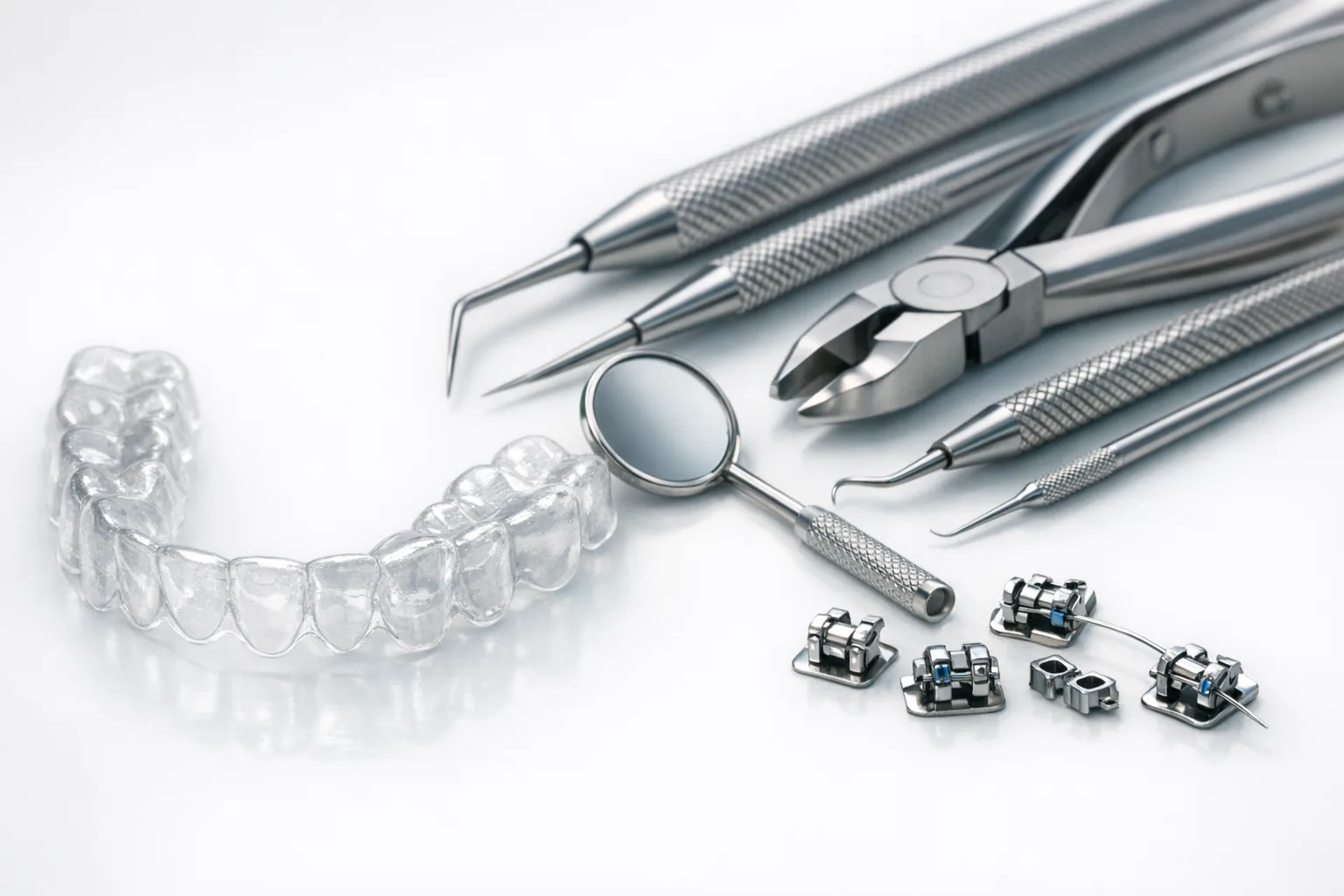
The $7,000 Price Gap Nobody Tells You About
Most patients budget $5,000 for braces and walk out paying $12,000. The gap between advertised prices and actual out-of-pocket costs has widened to a staggering $7,000 difference between basic metal treatment and premium invisible aligners in 2026, and orthodontists rarely volunteer that number during your first consultation.
Price-Quotes Research Lab data shows over 200 pricing data points from leading orthodontic providers across the United States. The findings reveal a market where sticker prices tell only half the story. Retainers cost extra. Emergency bracket repairs cost extra. Even the initial consultation—widely advertised as free—runs $50 to $200 at nearly a third of surveyed practices. By the time treatment concludes, most patients have spent between $4,800 and $8,500 depending on their chosen method and geographic location.
This guide pulls back the curtain on orthodontic pricing in 2026. You will see the real numbers for metal braces, ceramic brackets, lingual systems, and Invisalign clear aligners. You will learn which add-ons are unavoidable, which are optional traps, and how to negotiate your total cost before signing anything.
Why Orthodontic Prices Defy Simple Comparison
Orthodontic treatment is not a product sitting on a shelf. It is a customized medical service that unfolds over 12 to 36 months, depending on the complexity of your case. A teenager with mildly crooked front teeth will pay dramatically less than an adult requiring significant jaw realignment. This individualized nature means price ranges exist for legitimate reasons—but it also creates an information asymmetry that providers exploit.
When you search "cost of braces," you typically encounter answers ranging from $3,000 to $10,000. That spread is not consumer-friendly. Price-Quotes Research Lab exists to translate that chaos into actionable clarity. The four major treatment categories each carry distinct cost structures, hidden fee patterns, and financing realities that we break down in detail below.
Metal Braces: The $3,000 to $7,000 Reality
Traditional metal braces remain the most affordable full-treatment option in 2026. The low end of $3,000 applies to short-term, minor-correction cases treated at corporate chain clinics in lower-cost regions. The high end of $7,000 reflects complex adult cases requiring extended treatment time and premium-grade brackets.
The monthly payment breakdown tells a more nuanced story than the lump sum. Assuming an 18-to-36-month treatment window, patients pay between $150 and $350 per month. That calculation assumes the total cost is simply divided by months. Reality introduces adjustments—complex cases cost more per month, not just more months.
What the base price includes:
- Initial bracket bonding and wire installation
- All scheduled adjustment appointments (typically every 4 to 6 weeks)
- Standard metal brackets and wires
- Removal of appliances upon treatment completion
What the base price excludes:
- Diagnostic records (X-rays, 3D scans, photographs) — $150 to $500
- Pre-treatment dental work (fillings, cleanings, extractions) — $75 to $300 per tooth
- Emergency bracket repairs — $50 to $150 per incident
- Replacement of lost or broken wires — $25 to $75 per occurrence
- Extended treatment beyond original estimate — $100 to $300 per additional month
- Retainers — $100 to $600 per arch, required indefinitely
The average patient encounters at least two of these add-on costs during treatment. The most common surprise is the retainer expense, which orthodontists frequently present as an afterthought despite adding $200 to $1,200 to your final invoice.
Ceramic Braces: Aesthetic Appeal Carries a Premium
Ceramic (clear) braces function identically to metal brackets but use tooth-colored or translucent materials that blend with your natural dentition. This aesthetic advantage comes at a measurable cost: ceramic treatment runs approximately $1,000 to $3,000 higher than metal equivalents within the same practice.
The total price range for ceramic braces in 2026 spans roughly $4,500 to $9,500. The higher end reflects premium ceramic systems marketed as stain-resistant or reinforced, though independent clinical studies show marginal performance differences compared to standard ceramic options.
Ceramic braces carry specific hidden costs that metal treatments avoid:
- Longer treatment time. Ceramic brackets generate more friction against archwires than metal, potentially extending treatment by 2 to 4 months. Each additional month adds adjustment appointment costs and delays your transition to retainers.
- Higher breakage risk. Ceramic materials are more brittle than stainless steel. Patients who grind their teeth, play contact sports, or have deep bites face elevated bracket failure rates. Replacement brackets run $50 to $100 each.
- Dietary restrictions. While metal braces limit sticky and hard foods, ceramic brackets add concerns about staining from coffee, tea, wine, and colored sauces. Some patients purchase special cleaning products to maintain the "clear" appearance, adding $10 to $30 monthly.
The patient who chooses ceramic expecting a discreet, maintenance-free experience frequently discovers additional costs lurking in the fine print. Budget accordingly if aesthetics drive your decision.
Lingual Braces: The Hidden Cost of True Invisibility
Lingual braces attach brackets to the tongue-side (lingual) surface of your teeth, making them genuinely invisible from the front. This appeals to professionals, performers, and anyone unwilling to broadcast their orthodontic treatment. That invisibility commands a steep premium.
Lingual treatment in 2026 costs between $8,000 and $13,000 for comprehensive correction. This represents the highest price point among conventional bracket systems. The increased cost reflects several factors:
- Custom fabrication. Lingual brackets must be precisely shaped to fit the unique contours of the inner tooth surface. Most lingual systems require custom-made brackets and wires, adding laboratory fees of $1,500 to $3,000 to the treatment.
- Specialized expertise. Fewer orthodontists offer lingual treatment, and those who do have invested significant continuing education. That limited supply sustains higher prices.
- Extended chair time. Adjusting lingual brackets takes longer than conventional techniques due to limited access. Each appointment may cost your provider more time, and those costs translate to higher patient fees.
Hidden costs specific to lingual braces include speech therapy sessions (temporary lisping affects 60% to 80% of new patients), specialized cleaning tools, and elevated emergency repair costs due to the delicate bracket design. Patients should budget an additional $300 to $800 for these ancillary expenses.
Invisalign: The $3,000 to $8,000 Spectrum
Invisalign clear aligners dominate the adult orthodontic market, and pricing reflects both the brand's market power and the technology's sophisticated manufacturing process. The total treatment cost ranges from $3,000 on the low end to $8,000 for comprehensive cases requiring extensive tooth movement.
The perception that Invisalign is "just plastic trays" obscures the reality that each aligner set represents a custom-manufactured medical device engineered to apply precise forces to specific teeth. The iTero intraoral scanning technology, ClinCheck treatment planning software, and the actual aligner manufacturing in Align Technology's facilities all contribute to the cost structure.
Monthly payment plans for Invisalign typically range from $180 to $380 per month depending on the total treatment cost and practice financing terms. Most orthodontists offer in-house payment plans, while third-party financing through CareCredit or similar services may carry interest rates of 12% to 24% APR if not paid within promotional periods.
Hidden costs that catch Invisalign patients off guard:
- Attachment fees. Many Invisalign cases require small tooth-colored "attachments" bonded to teeth to provide grip for the aligners. These add $200 to $500 to the treatment cost and require removal at treatment end, sometimes at additional charge.
- Refinement aligners. If your teeth do not track precisely with the original ClinCheck projections, your provider orders refinement trays—typically 6 to 12 additional aligners. Some practices include one refinement set in the original price; others charge $300 to $800 per refinement series.
- Compliance monitoring tools. Align Technology's mandibular advancement feature and certain practice-specific compliance systems add $200 to $600 to treatment costs.
- Replacement aligners. Lost or broken aligners cost $75 to $150 per tray replacement, and delays in receiving replacements can extend treatment timelines.
- Vital attachments and elastics. Complex cases requiring elastics (rubber bands) to correct bite issues need additional appointments and supplies, adding $100 to $300 to the total.
The most significant hidden cost for Invisalign patients is treatment failure due to non-compliance. The system requires 20 to 22 hours of daily wear. Patients who repeatedly fail to meet this threshold may require treatment restart, effectively doubling their total expenditure. Some providers now charge $500 to $1,500 for treatment restart due to patient non-compliance.
The Hidden Fee Inventory: What Nobody Lists on Their Website
Beyond the major treatment categories, several expense categories consistently appear across orthodontic practices but rarely appear in advertised prices. Davis Smiles notes that patients frequently encounter line items they did not anticipate during initial consultations:
Diagnostic Records: Comprehensive orthodontic records typically include panoramic X-rays, cephalometric X-rays, intraoral photographs, and physical or digital study models. While some practices bundle these into the treatment fee, others charge $150 to $500 separately. The average unbundled diagnostic package costs $285 according to 2026 survey data.
Pre-Treatment Dental Work: Orthodontists require healthy teeth before applying brackets or aligners. Untreated cavities, gum disease, or damaged restorations must be addressed first. Patients switching providers mid-treatment frequently discover that their new orthodontist charges for records that the previous provider supposedly "included."
Insurance Coordination Fees: Some practices charge $25 to $75 per insurance claim submission, arguing that the administrative burden justifies the fee. This practice is increasingly common at corporate orthodontic chains and can add $150 to $450 over a typical 24-month treatment.
Missed Appointment Fees: While not universal, approximately 30% of surveyed practices charge $25 to $50 for missed appointments without 24-hour notice. Patients who miss multiple adjustment visits accumulate substantial incidental charges.
Treatment Extension Charges: When treatment takes longer than the original estimate (common with compliance issues, missed appointments, or unexpected tooth movement patterns), orthodontists charge $100 to $300 per additional month. Complex cases that originally quoted 18 months frequently extend to 24 or 30 months, adding hundreds in surprise charges.
Debonding and Finishing Fees: Removing brackets and residual adhesive, polishing teeth, and fabricating final retainers represent significant labor that some providers itemize. Debonding fees range from $75 to $250, while retainer fabrication adds $100 to $600 depending on material (Hawley wire retainer vs. clear Essix-style retainer vs. permanent bonded retainer).
Insurance, FSA, and HSA: Maximizing Your Coverage
Dental insurance policies with orthodontic benefits typically cover a percentage of treatment costs (usually 50%) up to a lifetime maximum ($1,000 to $2,500 in most 2026 plans). This coverage applies to metal braces more readily than to newer options—some insurance policies explicitly exclude Invisalign or impose lower benefit caps on clear aligner treatment.
FSA (Flexible Spending Account) and HSA (Health Savings Account) funds can cover orthodontic expenses including premiums, co-pays, retainers, and qualifying dental work. However, patients should verify that their specific orthodontic provider is an in-network provider for FSA/HSA purposes, as out-of-network providers may not qualify for direct reimbursement.
The most strategic approach involves scheduling a cost comparison consultation before committing to treatment. Many practices offer complimentary or low-cost initial visits that include preliminary treatment planning. Use these opportunities to gather itemized estimates from multiple providers, then compare the full cost breakdown including all potential add-ons.
Regional Price Variation: Why Your ZIP Code Matters
Orthodontic fees vary dramatically by geographic region, following patterns similar to real estate. Urban metropolitan areas in the Northeast and West Coast command the highest prices, while rural areas in the Midwest and South offer more affordable rates. The Coastline Orthodontics pricing survey found that the same metal braces treatment can cost 40% to 60% more in San Francisco than in suburban Kansas City.
This regional variation creates opportunities for motivated patients. Some individuals travel to adjacent metropolitan areas or visit orthodontic schools (where supervised residents provide treatment at reduced rates) to reduce costs. Dental tourism to Mexico or Costa Rica offers 50% to 70% savings on some procedures, though the logistics of follow-up appointments and emergency care present practical challenges.
Payment Plans and Financing: The Real Cost of "Affordable" Monthly Payments
Practices advertising "$99 per month" or "payments starting at $150" typically structure financing over extended periods that maximize total interest paid. A $5,500 treatment financed over 60 months at 12% APR costs approximately $1,100 in interest—bringing the true cost to $6,600.
Compare this to paying the same treatment upfront with a 5% discount for cash payment, which many practices offer. Negotiating the upfront price often yields better results than accepting the advertised monthly payment plan. Patients should always ask about early payoff penalties and whether the quoted monthly payment includes or excludes interest charges.
Third-party financing through healthcare-specific lenders has become increasingly common. These services offer promotional periods (6 to 18 months) with zero interest if paid in full before the promotional period ends. Patients who can reliably pay within that window should pursue these options. Those who cannot risk entering deferred-interest arrangements where all accrued interest from day one becomes due if the balance is not paid in full by the deadline.
The Bottom Line: What You Will Actually Pay in 2026
Price-Quotes Research Lab recommends budgeting 15% to 20% above any quoted treatment price to account for the hidden costs analyzed above. For the average patient, here is what realistic out-of-pocket expenditure looks like:
- Metal Braces: $4,800 base + $700 hidden costs = $5,500 total
- Ceramic Braces: $6,500 base + $900 hidden costs = $7,400 total
- Lingual Braces: $10,000 base + $1,200 hidden costs = $11,200 total
- Invisalign: $5,500 base + $800 hidden costs = $6,300 total
- Ceramic Braces: $6,500 base + $900 hidden costs = $7,400 total
These estimates assume average complexity treatment without significant complications. Complex cases involving jaw surgery, impacted teeth, or severe crowding can double or triple these figures.
Strategic Recommendations Before You Commit
Request itemized estimates from at least three providers. Ask specifically about diagnostic records, retainer costs, missed appointment policies, and what happens financially if treatment extends beyond the estimated timeframe. A provider who cannot or will not answer these questions clearly should not receive your business.
Verify insurance benefits before scheduling treatment. Call your insurance company directly (not your orthodontist's office) to confirm benefit amounts, lifetime maximums, and any exclusions for specific treatment types. Obtain written pre-authorization when possible.
Read the contract before signing. Pay particular attention to sections addressing treatment extension costs, early termination fees, and ownership of diagnostic records. Some practices charge $200 to $500 for records transfer if you switch providers mid-treatment.
The orthodontic industry has improved significantly in pricing transparency over the past decade, but gaps remain. Patients who approach treatment as informed consumers—not passive buyers—consistently achieve better financial outcomes. The numbers analyzed here represent 2026 market conditions, and prices will continue evolving as new technologies emerge and competitive dynamics shift.
Your smile investment deserves the same analytical rigor you would apply to any major financial decision. The research exists. The data is clear. Now you can move forward with confidence.
Key Questions
What is the average total cost of braces in 2026 including hidden fees?
The average total out-of-pocket cost for braces in 2026 ranges from $5,500 for metal braces to $11,200 for lingual braces when hidden fees are included. Most patients should budget 15-20% above quoted prices to cover retainers, emergency repairs, extended treatment, and diagnostic records.Is Invisalign more expensive than traditional metal braces?
Invisalign treatment costs $3,000 to $8,000 compared to $3,000 to $7,000 for metal braces. While the ranges overlap, comprehensive Invisalign cases often exceed the cost of equivalent metal brace treatment due to refinement fees, attachment costs, and compliance monitoring. However, monthly payment plans for Invisalign tend to be comparable to metal braces.What hidden costs do orthodontists not include in the initial quote?
Common hidden costs include diagnostic records ($150-$500), retainers ($100-$600 per arch), emergency bracket repairs ($50-$150 per incident), treatment extensions ($100-$300 per additional month), insurance coordination fees ($25-$75 per claim), and debonding charges ($75-$250). Pre-treatment dental work like fillings or extractions adds separate costs not typically included in orthodontic quotes.How much do ceramic braces cost compared to metal braces?
Ceramic braces cost approximately $1,000 to $3,000 more than equivalent metal brace treatment at the same practice. Total ceramic treatment costs range from $4,500 to $9,500. The premium reflects aesthetic benefits and includes hidden costs for longer treatment time, higher breakage risk, and specialized cleaning supplies.Does dental insurance cover orthodontic treatment in 2026?
Most dental insurance plans with orthodontic benefits cover 50% of treatment costs up to a lifetime maximum of $1,000 to $2,500. However, many plans apply lower benefit caps to clear aligners like Invisalign or exclude them entirely. Patients should verify specific coverage terms directly with their insurance company before starting treatment.How can I reduce the total cost of orthodontic treatment?
Strategies to reduce costs include negotiating upfront payment discounts (typically 5-10%), comparing itemized estimates from multiple providers, using FSA or HSA funds, choosing in-network providers, considering orthodontic school clinics for supervised treatment, and carefully following all provider instructions to avoid compliance-related treatment extensions that add monthly charges.Related Services
- Metal Braces: $4,800 base + $700 hidden costs = $5,500 total