Dental Implant Costs in 2026: Single Tooth vs Full Mouth by City and Provider Type
Dental Implant Costs in 2026: Single Tooth vs Full Mouth by City and Provider Type
Published 2026-04-10 • Price-Quotes Research Lab Analysis
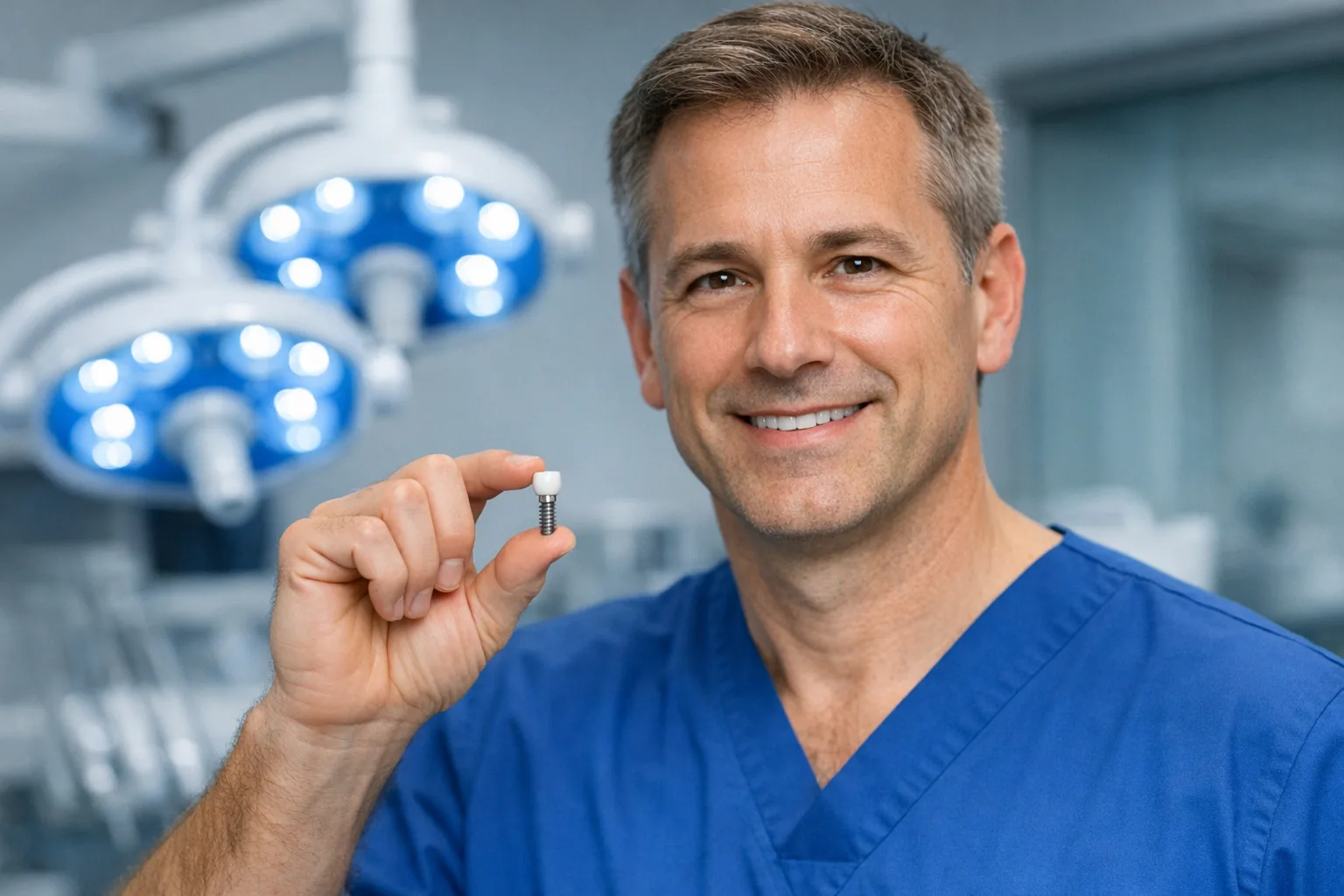
The Number That Will Make You Flinch
A single dental implant costs roughly $4,800 on average in 2026. Replace your entire mouth, and you could spend $90,000 or more. That's a 19-to-1 price ratio that catches most patients completely off guard when they first sit down for a consultation. Price-Quotes Research Lab dug into the numbers so you don't have to scramble for a financing plan while sitting in a dental chair.
The dental implant market has never been more fragmented. You're competing for appointments with retirees who've been saving for years, millennials who postponed this procedure through their twenties, and insurance brokers who still pretend implants aren't covered under most plans. Understanding the actual price landscape—not the marketing version—means the difference between sticker shock and a payment plan you can actually stomach.
Single Tooth Implant Costs in 2026
Let's start with the unit. One tooth. One implant. Here's what you're actually paying for when a dentist hands you that estimate:
The implant post itself—the titanium screw that fuses with your jawbone—typically runs $1,500 to $2,000. The abutment, which connects the post to the crown, adds another $300 to $500. The ceramic crown sitting on top? Another $1,000 to $2,000 depending on materials and who manufactured it.
According to Dental Roundup's 2026 pricing analysis, the total for a single dental implant in the United States typically lands between $3,000 and $5,500. More premium cases—think full zirconia restorations or complex bone grafting requirements—can push toward $7,000 per tooth.
That number assumes nothing goes wrong. If you need a tooth extraction first, add $150 to $600. Bone grafting if your jawbone has deteriorated? Another $300 to $3,000 depending on the extent. Sinus lifts for upper jaw implants run $1,500 to $5,000 per site. The base number is just the starting gun.
Full Mouth Dental Implants: Where the Numbers Get Serious
Now we enter different territory. Full mouth reconstruction isn't just eight times the cost of a single implant—it's a fundamentally different procedure with different materials, surgical approaches, and follow-up requirements.
The range is stunning. Dentillo's 2026 cost guide puts full mouth implants anywhere from $25,000 to $95,000 depending on technique. The Cleveland Clinic has publicly acknowledged that high success rates justify the investment, but nobody there is paying the bill.
Here's the breakdown by approach:
Implant-supported dentures use 4 to 6 implants per arch with a removable overdenture. This typically costs $14,000 to $36,000 per arch in 2026. The trade-off is convenience—you can remove these for cleaning—but you'll feel more movement than with fixed options.
All-on-4 and All-on-6 protocols use four or six strategically placed implants to support a full arch of fixed teeth. Advanced Smile's 2026 analysis suggests these range from $25,000 to $55,000 per arch, with total full-mouth costs reaching $50,000 to $90,000 when both arches are treated.
Zygomatic implants, used when severe bone loss makes traditional implants impossible, can cost $40,000 to $60,000 per arch. These anchor into your cheekbones rather than your jaw. The procedure is more complex, the recovery longer, and the specialists fewer.
The Implant Rankings 2026 guide notes that premium brands like Straumann, Hiossen, and Ankylos command higher prices due to their surface technology—SLActive coatings and nanotech surfaces that promote faster osseointegration. You can absolutely find cheaper implant systems, but the research consistently shows that material quality affects long-term success rates.
City-by-City: Where You Live Determines What You Pay
Dental implant pricing isn't random. It tracks with cost of living, local competition, and the density of specialists in your metropolitan area. Price-Quotes Research Lab found that geography alone can account for a 40% price differential on identical procedures.
New York City and San Francisco represent the ceiling. A single implant in Manhattan or downtown San Francisco regularly exceeds $6,000. Full mouth reconstruction in these markets can eclipse $100,000 when you factor in the area's higher overhead costs, specialist premiums, and patient demand. The Dallas implant cost analysis shows Texas pricing starting as low as $1,790 for budget options, but the range still extends to $7,000 for premium cases.
Denver, Austin, and Seattle fall in the middle-to-upper tier. These cities have seen rapid growth in implantology clinics, which has actually driven prices down slightly as competition intensifies. Single implants typically range $4,000 to $5,500. Full mouth cases run $40,000 to $70,000.
Midwest cities like Columbus, Indianapolis, and Kansas City offer the most favorable pricing environment. Competition among general dentists who have added implantology to their services has created downward pressure on prices. Single implants often fall in the $3,000 to $4,500 range. Full mouth solutions sometimes dip below $30,000 for implant-supported dentures.
Rural areas present a paradox. While nominal prices might seem lower, the lack of specialists means referrals to distant urban centers, additional travel costs, and potentially less experienced providers handling complex cases. The LP Dentistry 2026 pricing breakdown suggests rural patients often end up paying more total due to these indirect costs.
Provider Type: Who You See Changes What You Pay
Not all implant providers are created equal, and the letters after someone's name matter more than most patients realize.
General dentists who have completed implant training represent the largest provider segment. They typically offer the most competitive pricing—often 15% to 30% below specialist rates—and may provide payment plans that group practices can't match. The tradeoff is experience volume. A general dentist placing 20 implants per year operates differently than someone doing 200.
Prosthodontists specialize in tooth replacement and restoration. Their training includes three additional years beyond dental school focused specifically on complex reconstructions. They command premium pricing—expect 20% to 40% higher than general dentist rates—but bring experience with complicated cases that generalists might refer out. Toothoria's 2026 provider comparison notes that prosthodontists frequently handle full mouth rehabilitations that general dentists would decline.
Oral surgeons and periodontists handle the surgical phase. Some patients see an oral surgeon for the implant placement and a different provider for the restoration. This team approach can actually be cost-efficient if your case is complex—you're getting specialized expertise at each phase. Archyde's 2026 pricing analysis shows surgical specialists typically charge $1,000 to $2,500 for the implant placement surgery itself, before adding the implant components and restoration costs.
Dental schools and residency programs offer the lowest prices, sometimes 50% below market rates. The procedures are performed by residents under faculty supervision. Wait times are long. The cases accepted tend to be straightforward. For a single tooth implant with no complications, this can be an excellent option. Complex full-mouth reconstruction rarely qualifies for teaching clinic slots.
Material Costs: What You're Actually Buying
Titanium remains the dominant implant material. It's biocompatible, proven over decades of use, and integrates reliably with bone. Grade 4 titanium is standard; Grade 5 titanium—an alloy with aluminum and vanadium—offers slightly better strength for demanding applications.
Zirconia implants have gained market share. They eliminate the metallic appearance that sometimes shows through thin gum tissue, and some patients prefer their "metal-free" credentials. Denefits' 2026 pricing guide indicates zirconia implants typically cost $500 to $1,000 more per unit than titanium equivalents.
The crown material matters significantly. Metal-ceramic crowns—porcelain fused to a metal substructure—represent the budget option at $1,000 to $1,500 per tooth. Full ceramic or zirconia crowns cost $1,500 to $2,500 but offer superior aesthetics, especially in visible areas. For full mouth reconstructions, the material choice compounds across every tooth, turning a $200 difference per crown into a $4,000 difference across twenty teeth.
Insurance Reality: What Actually Gets Covered
Here's where patience runs out. Most dental insurance plans cover only 10% to 50% of implant costs, according to Dentillo's insurance analysis. Many plans exclude implants entirely under "major restorative" exclusions that have been standard language for decades.
Your out-of-pocket exposure breaks down like this: If your single implant costs $5,000 and your insurance covers 50%, you're still paying $2,500. For a full mouth case at $60,000 with 30% coverage, that's $42,000 leaving your pocket.
Medical insurance sometimes covers portions when implants are deemed medically necessary—after cancer treatment, severe accident damage, or congenital conditions. This requires documentation, pre-authorization, and often appeals. Dental schools and community health centers may offer sliding scale fees based on income.
Financing has become the practical solution for most patients. CareCredit, LendingClub, and in-office payment plans through providers like Denefits offer terms from 6 to 60 months. The SmartUnit implant cost calculator can help you model monthly payments across different total costs and interest rates.
Hidden Costs Nobody Mentions at Consultation
The advertised price never includes everything. Price-Quotes Research Lab identified several categories of charges that consistently surprise patients:
Diagnostic costs add $200 to $500 before any surgery begins. This includes 3D CT scans, study models, and treatment planning software. Some offices bundle these; others charge separately.
Temporary restorations during the healing phase—the 3 to 6 months while implants integrate—cost $300 to $1,000 per temporary tooth. You won't smile without teeth, so these are mandatory.
Follow-up appointments seem trivial individually but add up across a full treatment timeline. Each check visit, X-ray, and adjustment ranges $50 to $200. Over two years of monitoring, this becomes $500 to $2,000.
Maintenance after completion isn't free. Professional cleaning around implants requires specialized instruments and training. Annual maintenance runs $150 to $400.
Complication management carries separate charges. Peri-implantitis treatment—managing infection around an implant—costs $500 to $3,000. Implant failure requiring removal and replacement? That's a new implant cost plus surgical removal fees.
Making It Affordable: Strategies That Actually Work
Don't shop on price alone. The cheapest implant that fails becomes the most expensive implant you ever got. That said, here are approaches that genuinely reduce costs without compromising care:
Get multiple quotes. Treatment plans for the same case can vary by 30% to 50% between providers in the same city. The Smilepedia 2026 cost guide recommends at least three consultations before committing.
Consider dental tourism cautiously. Mexico, Costa Rica, and Thailand offer implants at 50% to 70% below US pricing. The Cebu Dental Implants guide documents legitimate clinics with US-trained specialists. The risks—follow-up logistics, warranty enforcement across borders, and variable standards—require serious consideration.
Maximize tax advantages. Health Savings Accounts cover dental implants in most plans. Flexible Spending Accounts through employers offer pre-tax dollars. Some patients schedule procedures across two calendar years to spread tax-advantaged contribution limits.
Negotiate directly. Many practices offer cash discounts of 5% to 15% for payment in full at time of service. Others will match competitor pricing if you show documented quotes.
Start with what matters most. If you need eight implants but can only afford four right now, prioritize the visible teeth and functional necessities. Phased treatment plans spread costs across years while addressing urgent needs first.
Technology Is Changing the Cost Structure
Three developments in 2026 are beginning to pressure implant pricing downward:
Computer-guided surgery reduces chair time and complication rates. The investment in planning software and surgical guides pays back through efficiency. Practices using these systems can handle more cases per month, creating potential for competitive pricing.
3D printing of surgical guides and provisional restorations has moved from experimental to standard in major practices. The Dental Express 2026 cost breakdown notes that in-office printing eliminates third-party laboratory delays and markups.
AI-assisted treatment planning identifies optimal implant positioning faster than manual analysis. This reduces planning costs and improves accuracy, though it hasn't yet translated to significant patient savings.
What Success Actually Costs Over Time
Dental implants aren't cheap upfront, but the lifetime cost comparison often favors them over alternatives. A bridge requires replacement every 10 to 15 years. Dentures need rebasing, relining, and eventual replacement. Implants, when properly maintained, can last decades—some data suggests permanent for patients who maintain good oral hygiene.
The Cleveland Clinic's published success rates for implants exceed 95% over ten years. Compare that to bridge failure rates that climb steadily after the first decade. The math favors implants for younger patients who can maximize the investment horizon.
The Bottom Line Nobody Tells You
Single tooth implants will cost you $3,000 to $7,000 in 2026. Full mouth reconstruction will cost $25,000 to $95,000 depending on technique, materials, and geography. Your city can add or subtract 40% from those numbers. Your provider type adds another 20% to 40%. Your insurance covers a fraction, if anything.
You cannot make an informed decision based on advertised prices alone. Every implant case includes variables—bone density, gum health, occlusion forces, material preferences—that shift the final number dramatically. The consultation isn't a formality. It's where the actual price gets discovered.
Get multiple treatment plans. Understand exactly what each includes. Model your financing across at least three scenarios. And start the process sooner rather than later. Every month you delay is another month of bone loss that might require grafting, another year of wear on adjacent teeth, another period of compromised nutrition from eating limitations. The implant you afford today might cost twice as much in five years.
Price-Quotes Research Lab will continue tracking these costs as the market evolves. The technology improves. Competition intensifies. At some point, the floor will rise and the ceiling will stabilize. Until then, knowledge remains your best financial tool in a market that still doesn't publish prices openly.